




George Thorogood
The Blues Radio International Interview
By: Jesse Finkelstein
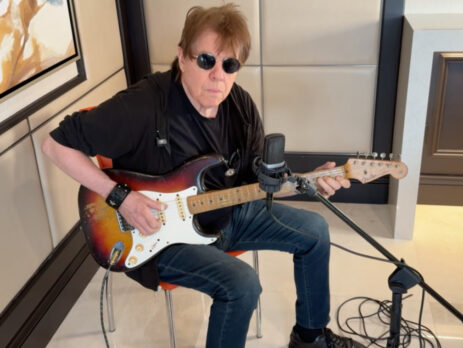
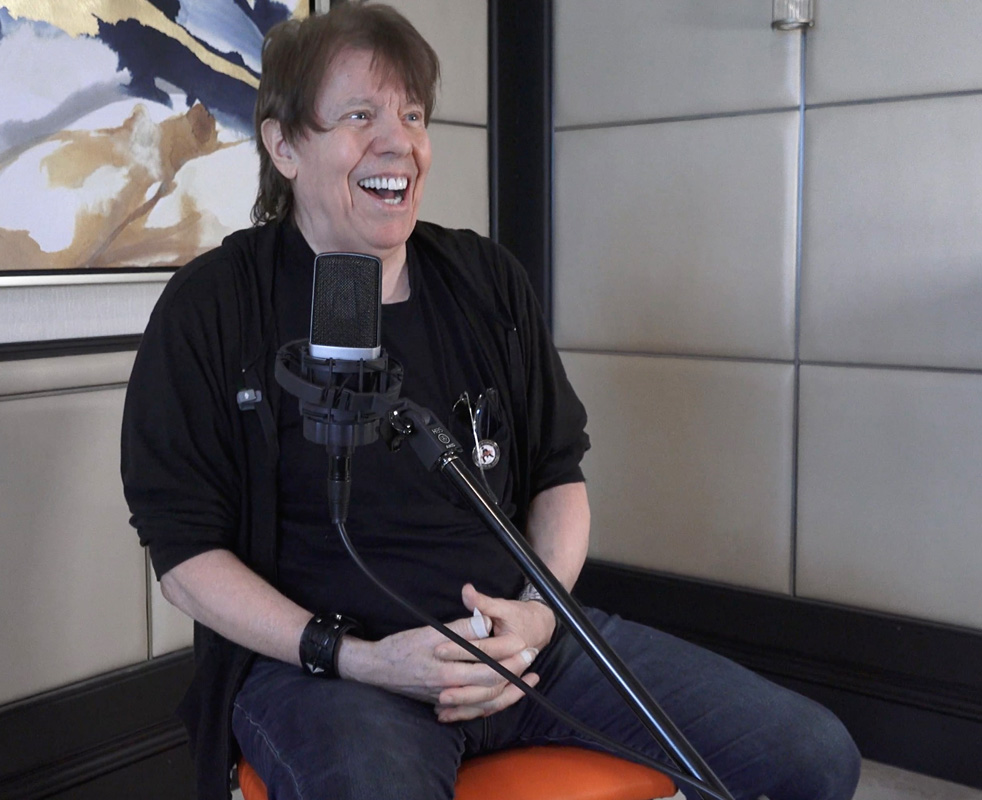
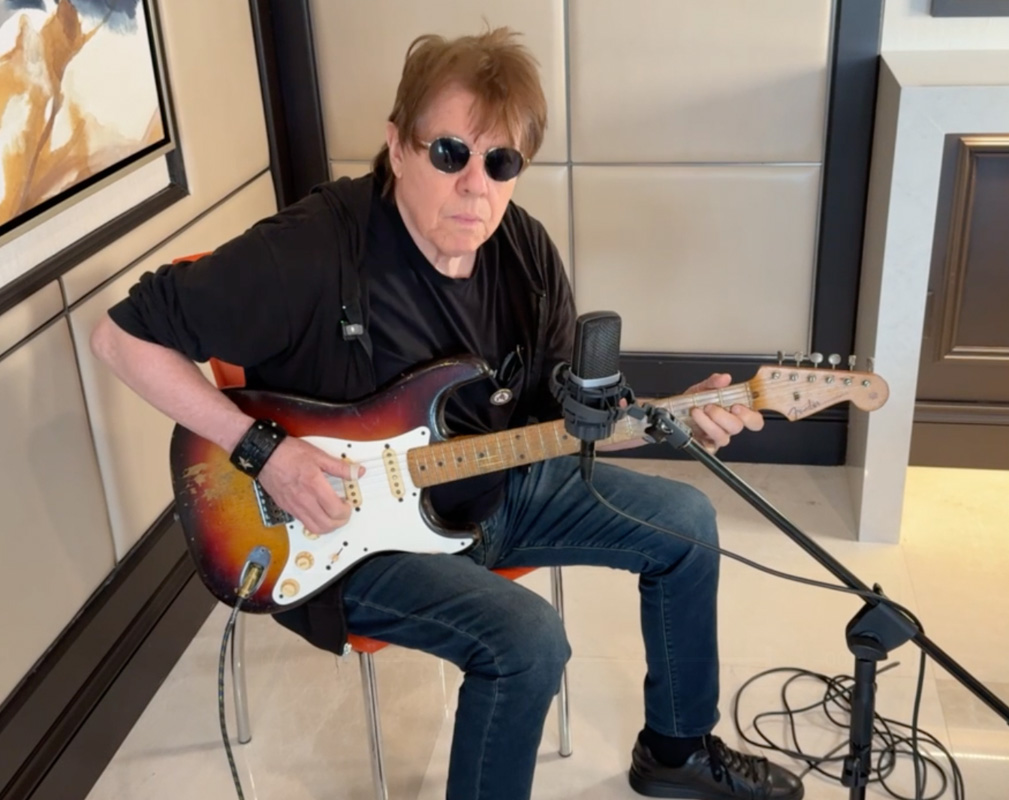
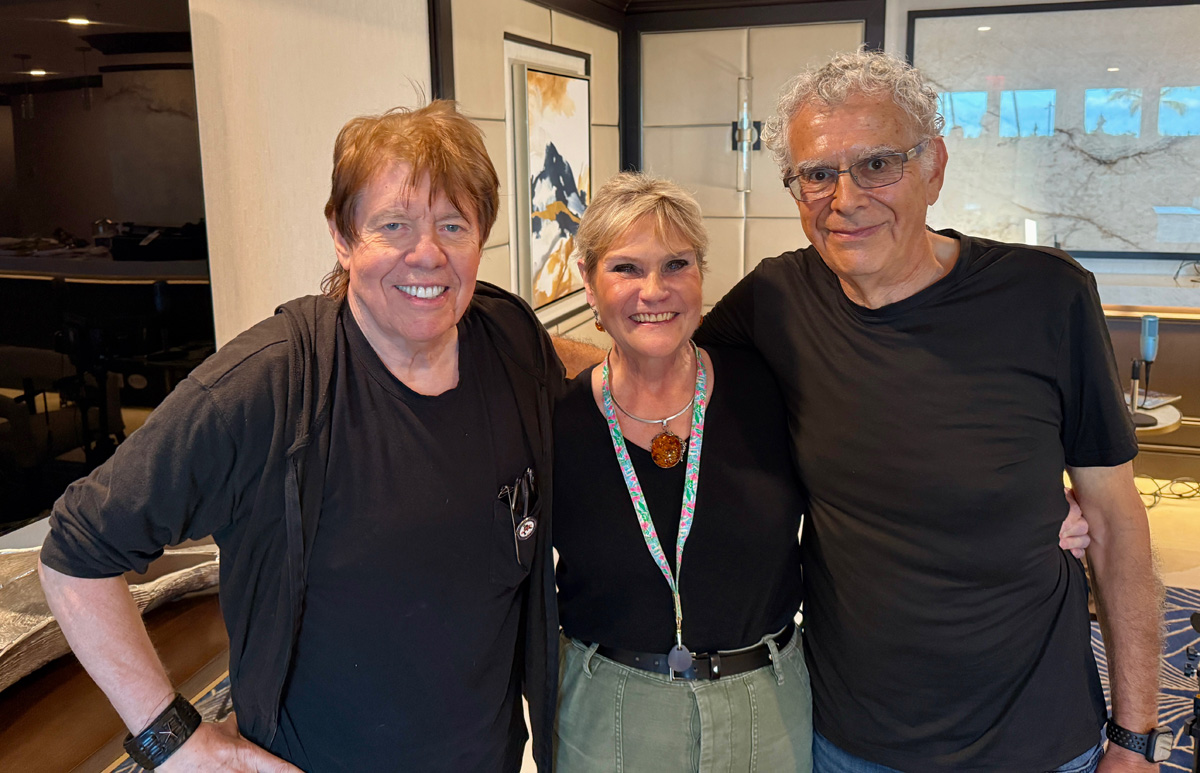
George Thorogood and the Destroyers have been playing rock and blues for appreciative audiences worldwide for over half a century. George joined Jesse Finkelstein of Blues Radio International in September, 2025, to talk about his music and influences. The following has been edited for length, but you can see the entire interview, including George playing a few tunes solo, at https://youtu.be/HlulTdCexCQ
Jesse: You don’t consider yourself a blues musician, but it is clear that blues has been a strong musical influence for you.
George: From the time of Chuck Berry and Bo Diddley, right up to the time of Hendrix and Zeppelin, right, which was a 15-year run that in that time, everybody, the bands and every guitar player studied the blues real hard because in Bo Diddley and Elvis Presley's time there was no other music, there was no rock and roll yet, and they based the rock and roll on the blues as we all know. First you had to start with Robert Johnson, and you had to listen to John Lee Hooker and Elmore James and Howling Wolf and then up to Bo Diddley and Chuck Berry, and if you didn't educate yourself in that as a guitarist I feel you really can't play rock guitar properly, you really can't do it. John Lennon said that if you're gonna play rock and roll you have to study the blues. If Jimi Hendrix wanted to make just a straight solid blues record besides his rock stuff, that would have been the end. I always look at Led Zeppelin and I think Led Zeppelin reminds me of Robert Johnson with a band, it's like a band version of Robert Johnson. Keith Richards, who knows a little bit about the blues and rock and roll, said that was really, really there, he said every song you hear, even the most watered-down song you can find, if you water it down, down deep in there somewhere there's blues.
Even if you're listening to Leslie Gore or you're listening to, you know, somebody, a contemporary artist of that time, he said if you go back far enough in time, all the way back 3,000 years ago, the first song was probably a blues song.
Jesse: What is it about the 1, 4, 5 [the traditional blues musical pattern] that resonates with people?
George: I'll tell you this, Jesse. It wasn't so much we were attracted to it, that's all there was, you know, before people like Wes Montgomery came in and Miles Davis, who advanced and evolved to a more, I don't want to say sophisticated music for lack of other words, but that's all there was. And another thing is it's not complicated to play, it's difficult but it's not complicated. So that might have been the attraction. The stuff I grew up in was Dylan, The Beatles, you know, Hendrix, this is some of the greatest rock music, I said, my God, I'll never get there. And then once I started listening to blues I said, hey I could do that.
Jesse: We all had teachers who were teachers in the sense that we knew them formally, but I've often thought that we have inadvertent teachers too. There are people who taught us who didn't know they were teaching us, and we didn't know they were teaching us, but looking back— they did. Who were those people for you?
George: All of them, you know. I'm fond of saying, I'll never play like Jeff Beck or Neil Young or Clapton or any of those guys or Elvin Bishop. I'll never play like, but I went to the right school. I went to the same school they did.
They graduated with honors. I squeaked by with a C plus, but I did go to the right school. And so I listened to everybody, everybody.
My style evolved more closer to a Bo Diddley or a John Lee Hooker. It's one chord, you know. But those two guys can do more with one chord than a lot of people can do with a dozen chords.
Jesse: This all hearkens back to the Mississippi Hill Country blues tradition, R.L. Burnside and those guys often would have 15 minute one chord songs, like John Lee Hooker's boogies, and yet they created a lot.
George: It worked. You never got tired of it. One of our most treasured idols that plays music on one chord is James Brown.
“Brother's Rap” was a great song. It rarely changes key, but it keeps going.
I had people tease me in high school. They'd say, oh man, while they were listening to Sgt. Pepper's, I was listening to Bo Diddley's 16 all-time greatest hits. And they said, oh man, you're not going to go anywhere with that one chord crap.
Music was getting more sophisticated in the mid to late 60’s. A lot of great music, but I couldn't play it. And they said, well, you're not going to go anywhere with that.
But “Who Do You Love” is still on the radio and “bourbon, scotch and beer.” Granted, it's our version of it, but that style of it is still working.
Jesse: when I listen to “Bad to the Bone,” I can't help but think of Muddy Waters’ “Mannish Boy.:” What is it about that sound that sets people on fire?
George: Well, to begin with, when I was putting that song together, I had Muddy Waters in mind, totally.
I wrote it for Muddy Waters. I wanted him to do that song. I thought it'd be perfect for him.
I took the song and we sent it to Muddy Waters. Man, we got a terrible reaction from his manager.
Jesse: What year was this?
George: 1982. 81, 82, about that time. And the retort was they were offended because he said, Muddy Waters will never record a blues song written by a white guy.
And I thought, if Eric Clapton had written that song for Muddy Waters or Keith Richards, they would have recorded it in the next 10 minutes. But I'm a nobody from Delaware. That really hurt me.
I said, this isn't George Thorogood. This is for Muddy Waters. So then I pushed the song to Bo Diddley, who liked it.
He wanted to do it, but he didn't have a record deal at the time. So yours truly ended up doing it, by process of elimination.
Jesse: Tell me about Bo Diddly.
George: I met Bo Diddley for the first time, I think, in 79. And I knew him over the years and called him on the phone. We did Live Aid together. We did festivals together. We knew each other. And we were doing a festival, a blues festival in California. We had a relatively new tour manager. And she was from Great Britain. And she said, “who is this Bo Diddley bloke anyway?”
And I said, “Bo Diddley? he's the greatest.” And I'm very calm about it. Remember, I've known him for 20 years.I'm standing next to the bandstand, saying, well, Bo Diddley is the originator.
Bo Diddley invented rock. I mean, listen to the middle of “Magic Carpet Ride.” Listen to “Magic Bus.” Listen to “Sympathy for the Devil.” Bo Diddley created rock. So I'm kind of educating her.
And I'm kind of casual about it. You ready for this? I'm standing there talking.
And Bo Diddley walks up on the stage. And I go “it's him! It's Bo Diddley!” The rush was still there. You know what I mean? Even though I knew him as a man and all that.
But that rush for me, just seeing him walk by, still didn't leave me. She looked at me. She thought I was having an epileptic fit.
Jesse: Musicians will say, “we're going to play this with a Bo Diddley beat.” Everyone knows what that is. That really sets people off. You hear that beat start, even just with the rhythm section, and people react.
George: People stand up, right? I know. It's crazy. I mean, that rhythm rivals or maybe elapses even the opening lick to “Johnny Be Goode” as soon as people hear it.
As soon as that Bo Diddley rhythm hits when you're in a band, take it from me. I said “Let's try this.” The dance floor was packed. And it's still packed.
It hits people today. It does.
Jesse: There’s something very universal about that beat: it’s very primal.
Yeah, it's that rhythm that gets them, that rhythm. And dare I say it, I was playing a gig not too long ago, three or four nights ago. And we got into our thing.And as soon as we hit that Bo Diddley thing, people got up and danced. I'm going to tell you something. All of them, just about all of them were children, not older than nine or ten years old.
They had no history with it. They just reacted. So who says this stuff is out of date? Anything that's great is going to last.
Jesse: And it is enduring. We don’t acknowledge that so much of this great music was created by people who never had formal musical education.
George: Bo Diddley, on the other hand, will surprise you. He was a concert violinist at one time. He studied opera. He can really get his voice up there like that.
He can really belt it. So his background, his training was a little more, I don't want to say sophisticated, but a little bit more advanced than people give him credit for.
We were in a trailer together and I said, “I don't know why they keep asking me to play at these blues festivals,” I said, “I can't play the blues.” And Bo said, “neither can I—but I'm a rhythm mother for you!”
And boy is he. So that's why Bo did what he did. His idols were Howling Wolf and Muddy Waters. That's what he wanted to do.
But it just didn't happen that way. And I said “my idols in blues were Elvin Bishop and John Hammond.” I said, “I can't do that.”
 Jesse: These guys affected you at an early age. This is something that you knew you could do. Do you have a different perspective on them having done this for decades, played in front of audiences around the world? Do you see that music differently, or what they taught you differently?
George: Not really. When it hit me, the blues hit me, I was just crazy about John Lee Hooker, Elmore James and Robert Johnson. And I started listening to Jimmy Reed. I mean, it was like something that I didn't take control of—it took control of me.
It was always, to me, the blues, the blues, the blues. And once we did our first two records, we started, like most bands, evolving into something.
The Stones were originally a blues band. I mean, originally Elvis was singing blues. And then as you go on, you kind of, hopefully evolve into ZZ Top or Led Zeppelin, those are the roots.
But those things in you, they will never leave. It might not be as intense because I was very young then, it was very new, new to me anyway. And it was very exciting.
And I still can feel that in a way. Remember, I was all alone playing the guitar in my basement. Well, my parents' basement, really.
And now we've evolved into a regular working band. So my mind is on a lot of other things. So I will now and again sit down and say, B.B. King once said before he went on, he had tapes by Blind Lemon Jefferson, I think Robert Johnson, he said he would listen to it so he could get back to that groove, so he wouldn't lose that groove in his soul.
We're affected by a variety of influences in our life. Well, if you look at people like, say, Robert Johnson, he was doing a style that was very much in vogue at that time. He was just better at it than anybody.
We always say Jimi Hendrix is our Robert Johnson. You know what I mean? Bo Diddley's thing is completely unique. I mean, you can't pin it down to anything.
Chuck Berry took Jimmy Reed's rhythm and he speeded it up.
Bo's thing is like, there's nothing in the world like it. But it was probably some of his passion taken from the blues to begin with. And that's what makes him so incredibly unique.
Elmore James was Robert Johnson with an electric guitar. That's how he reminded me of. He just took it, plugged it in the amp and zipped it up.
Because after all, Robert Johnson did “Dust My Broom” before Elmore. And it's funny because Keith Richards and Mick Jagger, when they first heard Brian Jones, what was he playing? “Dust My Broom.” See what I'm saying? It's like Frank Zappa said to me, rest in peace, he said, it's a disease, George.
Jesse: An innocuous disease, but incurable, once it gets into your soul.
People like Blues Hall of Fame member John Primer, who grew up as a son of a sharecropper, made his own instrument. He set up a piece of piano wire strung between two nails on the barn, using a can as a slide. It was all very primal, and it was part of their lives.
George: I was that way. I made my own guitar in shop class, just like those people didn't put some wire on it and stood in front of the mirror pretending I was Jeff Beck, or Brian Jones, you know, before I could get the genuine article. And it's funny, and you know more about this than me, tracing one's back, that piece of stick with one string on it that people played in the Mississippi Delta before they could get a guitar, like you said, it was called a diddly bow.
Jesse: A good friend of mine, Bob Margolin, who played with Muddy for a long time, pointed out that none of this is really new.
What Muddy played was played before him. And what people playing Muddy play is related. It's often repetition of the lyrics in different combinations. A lot of the same thematic stuff that you see repeated over and over again. We're playing with the same blocks. We're just arranging them differently.
George: Chuck Berry once said, there is nothing new under the sun. When Chuck Berry speaks, I listen.
Jesse: Do you think pain is a necessary component to making music and to creating music? Can you really create, can you really put that feeling into it if you don't have pain behind it?
George: I would say it helps. You know what I mean? The one thing, when I saw the films of Janis Joplin performing—what I realized right away, I said, this is a person who has experienced pain.
If people come up to me and say, what is the greatest blues song ever? And I said, the greatest blues song ever I've ever heard is the song “Yesterday.” And they go, well, that's not blues.
That's the Beatles. I said, you're not listening to what I'm saying. Here is a young man singing out of pain of the loss of his mother that he watched her die of breast cancer.
He was only 14. That is the greatest blue. I mean, you can't get bluesier than that.
For some people, it's [the voice of] the guitar. They let it rip. I once asked Jeff Beck how he does what he does.
He shrugged and he said, beats me. He just does it. Wow.
Jesse: Speaking of Jeff Beck and technique, there's so much focus on what people do on the fretboard. I don't think enough people pay attention to the right hand.That's pretty distinctive for you. Can you tell us about that?
George: Well, both hands are important.
If you want to catch a ground ball, there's only one Ozzie Smith. You do need both hands. I have to go along with Keith Richards' theory on guitar playing.
I know I keep going back to those people. But he said the most underrated guitar style is rhythm guitar. Because that's the body.
The rhythm guitar is like a second drummer. You know what I'm saying? And John Lennon once said, they said, what about your guitar playing? He said, I don't play much lead, but I can drive a band.
I mean, very few people can do what Chuck Berry, John Fogerty could do, play great rhythm and great lead guitar. But Keith Richards was saying it's the rhythm guitar. There are no solos in “Jumpin' Jack Flash.” That's the greatest rock and roll song of all time. And it just keeps going and going and going. Brian Jones just keeps pumping that rhythm.
Because the great rhythm guitars of the Everly Brothers, I can hear the Beatles listening to that. Now, the Everly Brothers must have heard it somewhere, and they probably heard it from Bo Diddley, who heard it from Muddy Waters, who heard it from Robert Johnson. You see what I'm saying? And I am a mere pawn in the game with this thing.
Jesse: I think all great musicians recognize that. It's arrogant to think that anyone has completely invented anything musically. It came from somewhere.
But what you do is you bring it forward and you bring this history to people today. And so you're playing to audiences now music that you played half a century ago, that was played decades before that.
George: Exactly.
Jesse: You’ve been out on the road for a long time. You seem to really enjoy it. Is that true? Or is it getting old?
George: I can see just by sitting in this room that you and your wife still dig each other. And time just adds to that.
Not everybody's got to write a hit record for triple platinum. And then they're stuck with it for the rest of their life. Well, we never really approached it like that.
I want to do stuff that we dig and for people who also dig it for what we're doing. And we're very fortunate to get that with our audiences. But the real kick is when you see the real young people dig it. I'm talking real young.
Jesse: I’m surprised because a lot of musicians I know are playing to audiences no younger than 50—but you're telling me you've got nine-year-olds dancing.
George: Yeah, they're jumping all over the place, man. I said, oh, this is really cool.
Jesse: Has your performance evolved over the years in terms of the way you interact with the audience or has it been pretty constant
George: It’s evolved in a different way than when the three of us first got into the bar. People reacted, got up and danced— it moved them. So it's evolved in a different kind of way, but it's still there. I want people to react to what we're doing.
Jesse: Thanks, George.
George: It’s my pleasure!
Share this post
Related
Posts
Featured Articles, Online Exclusives, Promotions, SFL Music Articles
GOV’T MULE – Warren Haynes
Interview