




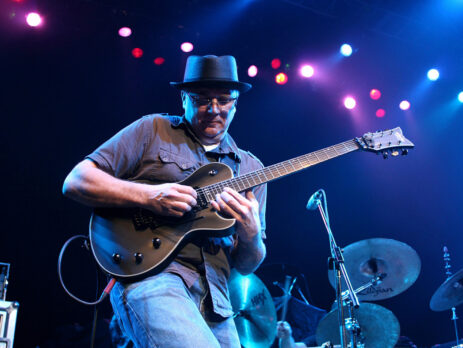
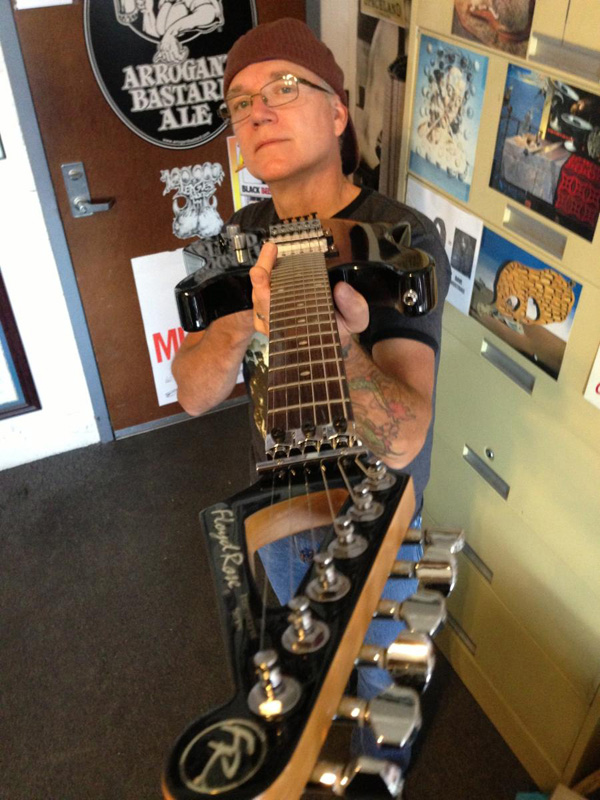
 Chris Poland
Guitar Is My Business & Business is Good!
by Brian Tarquin
Chris Poland is probably best known as the former lead guitarist for Megadeth, during the band’s early years on the classic releases Killing Is My Business... And Business Is Good! and Peace Sells... but Who's Buying?. He is much more than just what you hear on those records. Chris has an incredible flowing technique and a great tonal dimension as a guitarist, which can be heard in his power trio OHM. I have collaborated with Chris for many years now on such releases as Guitars For Wounded Warriors, Orlando In Heaven and Beyond the Warrior’s Eyes. He never disappoints with his smooth speedy solos and feel.
Even before his stint with Megadeth, Chris’ clean, overdriven tone, and legato phrasing made him instantly recognizable. His unique style can be partially attributed to an injury to his index finger on his fret hand. This injury forced him to develop a style that includes smoothly phrased passages and wide intervallic leaps. Chris was in a fusion band called the New Yorkers with Robby Pagliari on bass, Gar Samuelson on drums, and Gar’s brother Stu playing guitar, along with various horn players. Their music was in the same vein as Return to Forever, Mahavishnu, Brand X. Although the New Yorkers never released any music, recorded demos & rehearsals do exist.
In 1984 Megadeth hired Chris, replacing Kerry King of Slayer, who was temporarily filling in as lead guitarist. In 1985, Megadeth released their debut album; Killing Is My Business…And Business is Good!, on a small independent label, Combat Records. Though both Dave Mustaine and Chris shared much of the lead guitar work equally, it was obvious that Chris had easily incorporated his fusion style into this genre of music. In 1986, Capitol Records bought the rights for Peace Sells…But Who’s Buying? from Combat Records. Capital put their promo machine behind the album that only a major record label could provide. The success of Peace Sells found Chris and Megadeth among the metal heavyweights of the day: Iron Maiden, Judas Priest and Metallica. Chris’ playing can be heard on such metal classics as “Peace Sells…But Who’s Buying?”, “Devils Island” and “Good Mourning/Black Friday”.
1. Let’s go back to the recording of Megadeth’s “Peace Sells…But Who’s Buying?” what was your typical set up, guitar, amp, pedals, etc? Were there any particular artists or songs at the time that influenced you?
I was using a BC Rich Warlock at the time with a Rocktron and a post-Plexi '75 Marshall. I also had a twin reverb in the studio. I didn't use any pedals in my set-up at the time. I was listening to a lot of fusion back then as well - Weather Report, Jeff Beck, Mahavishnu, etc. I grew up on Hendrix, Clapton, Zeppelin as well, so that influenced my playing.
2. How did the process go, were the guitar parts written in the studio or already laid out between Dave & you? How was your guitar parts juxtaposed to that of Dave’s?
With "Peace Sells..." we were playing those songs on three successive tours before we even went into studio, so we really had the songs down and developed. Dave wrote the music, but we contributed ideas on arrangements here and there in the studio. Dave and I had unison guitar parts and would trade off on leads for certain songs.
3.What microphones were used to record the guitar parts? Do you remember the studio gear & producer? Was it recorded & mixed at the same studio?
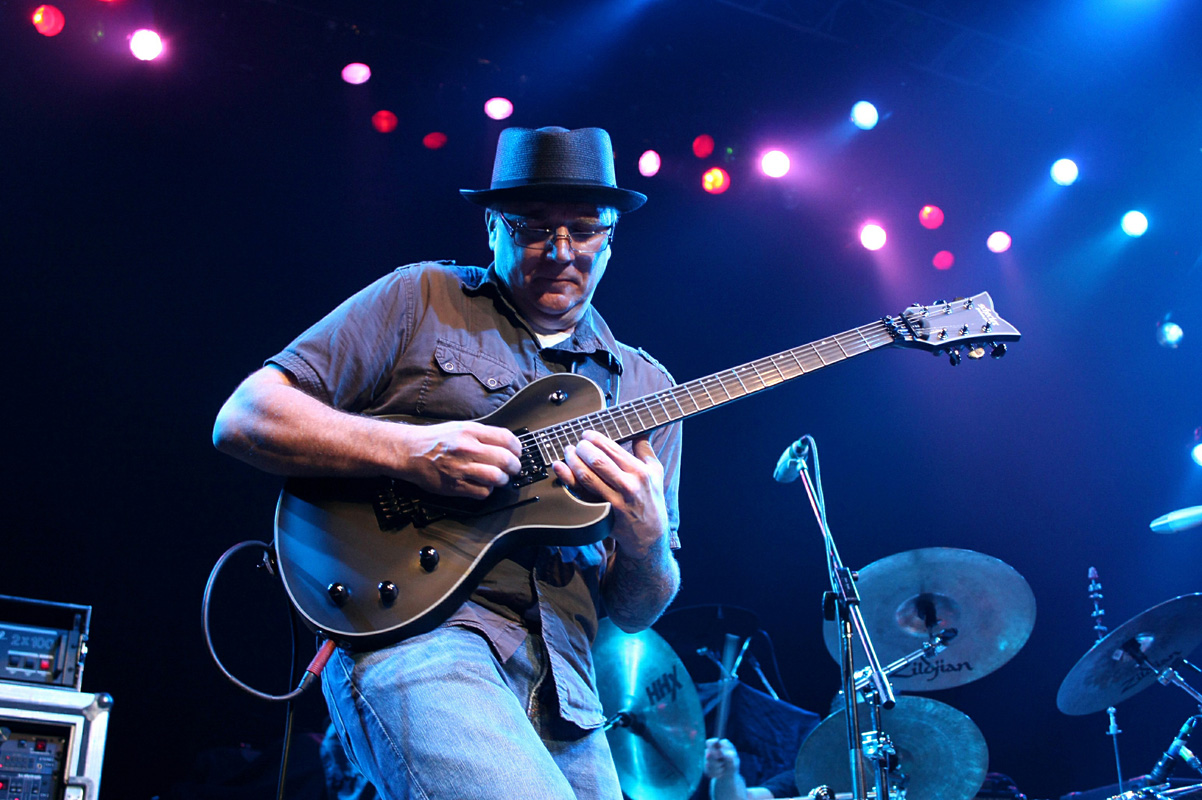 I think we had 57s, or 421s. We didn't have esoteric mics. Randy Burns was a great producer and really knew how to record the type of music we were playing. The drums were recorded at The Music Grinder in Hollywood, and we did some of the overdubs at Mad Dog Studios in Venice, CA.
4. Since the Megadeth days you have been a successful & active fusion guitarist with your band OHM. Can you tell us how you formed the band and why you went back to fusion? Also how did your experience with Megadeth help you in your fusion playing & writing?
I was playing in a few bands around LA in the late '90s and just wasn't enjoying it. I knew Robby Pagliari (OHM:'s bassist) for years, as we played in a fusion band called The New Yorkers, in the late '70s/ early '80s, when I first moved to LA. Gar Samuleson (Megadeth drummer) was also in that band on drums. With OHM: we really wanted to play the music we like to play. My experience with Megadeth really taught me about the music business and didn't really influence me from a musical direction standpoint, although I really enjoyed playing that music and the challenge of it.
5. What is your typical recording set-up and how do you go about recording your guitar tones today in our digital world?
This depends on the studio. In my personal studio we record mostly live and overdub some guitars. Right now, I have a Tascam M2600 MK2 board and a Toft board. When I do studio sessions, I go to my friend Randy Pevler's Protools studio.
6. Do you have a favorite can’t-live-without guitar processor/effects that you use?
That is a tough question. Right now, I would have to say my Yamaha D1500 delay and DC1210 Chorus are my favs.
7. What projects have you worked on in the past?
I recorded with Chicago sax player, Frank Catalano (played with Miles Davis and Santana), bassist Sean O'Bryan Smith (Nashville session ace), and drummer Jim Gifford (Chicago session ace). I recorded a OHMPHREY disc with Robby (OHM: bassist), Jake, Joel, and Kris from Umphrey's McGee here at my studio.
8. Anything you’d like to add; any guitar recording tips or advises?
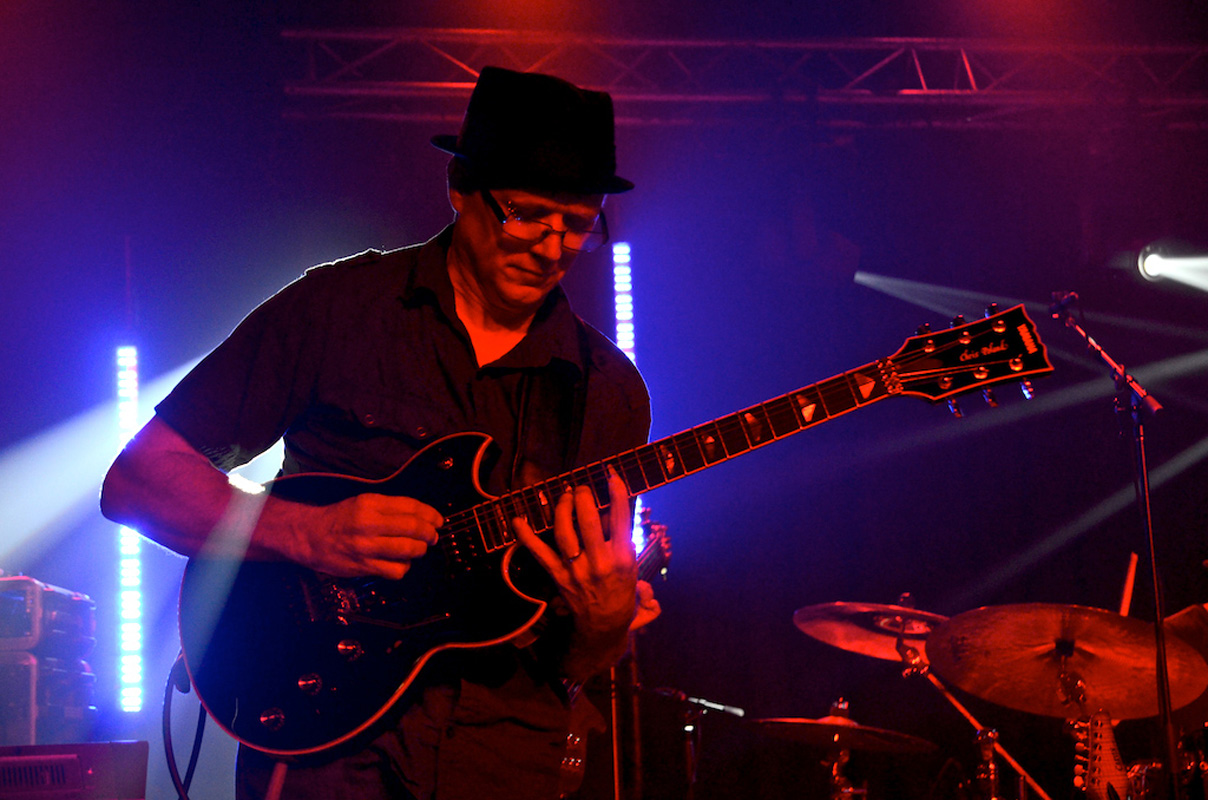 Use your ears and don't follow the "rules" of recording. If you like your sound then record it, so you don't lose what is happening at that moment. I really would like to promote live recording. I have been really feeling lately how much more energy there is in a live context. Thank you to all the fans out there and awesome musicians/ projects I have worked with over the past few years. I have been having a lot of fun.
Conclusion:
Chris is always a pleasure to record with in the studio. It’s refreshing to work with artists that have a good understanding of signal flow and have experience engineering themselves. It’s a much trickier task than it sounds, especially when you throw analog into the mix. As an artist recording yourself in the studio comes with a myriad of details to be aware of, recording levels, input signals, insert chains like compressors, EQs etc. The last song we collaborated on “Behind the Iron Curtain” featured on the album Beyond the Warrior’s Eyes is one my favorite tracks we recorded together. Chris and I come from a similar musical background being heavily influenced by the 70’s fusion movement. Truly a very enriching time for instrumental music with albums like Billy Cobham’s Spectrum featuring Jan Hammer and Tommy Bolin and of course Jeff Beck’s Blow by Blow produced by George Martin which changed us forever!
Share this post
Related
Posts
Featured Articles, Online Exclusives, Promotions, SFL Music Articles
GOV’T MULE – Warren Haynes
Interview