




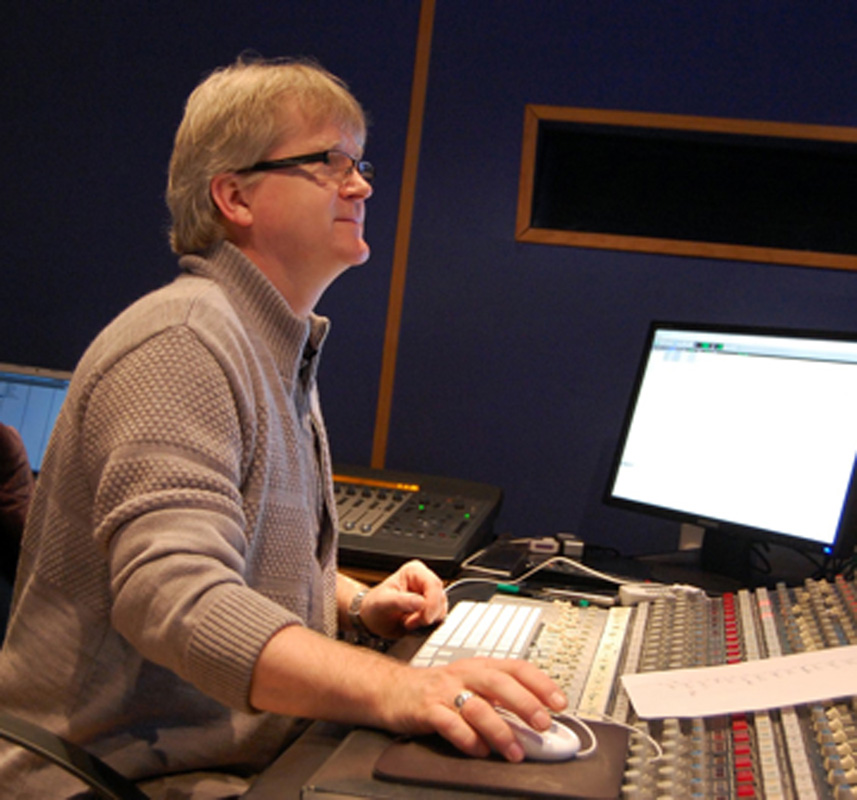
 Flemming Rasmussen
For Whom The Bell Tolls
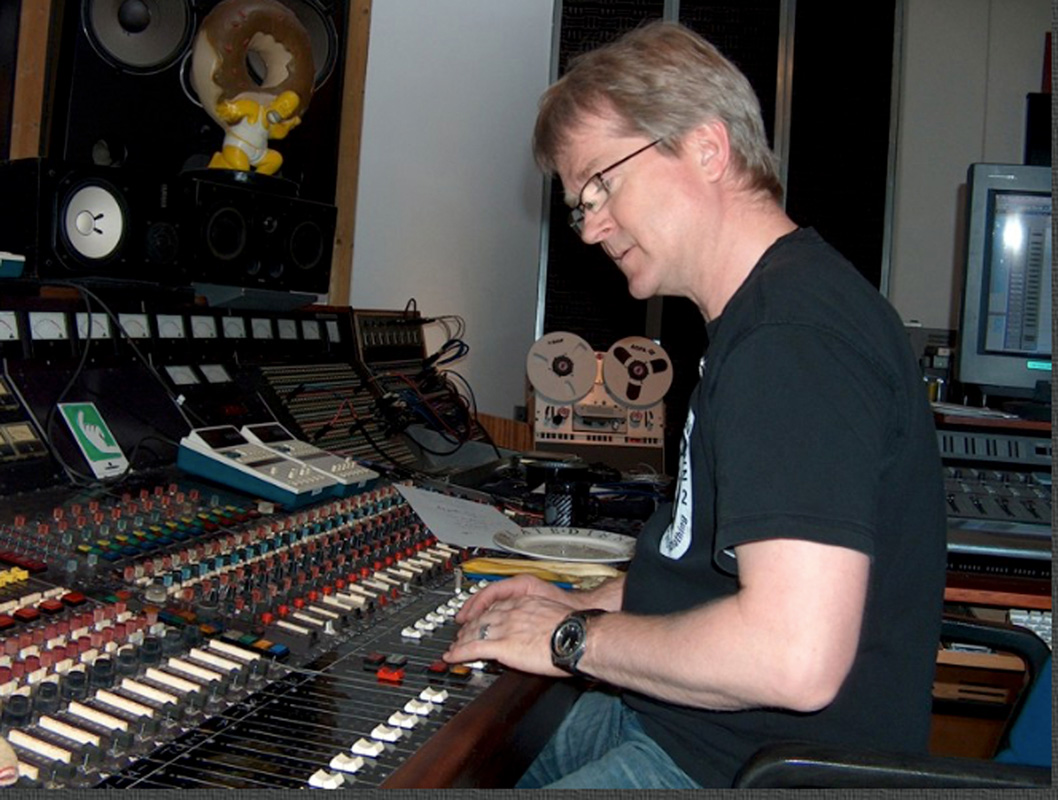
The Danish engineer-producer behind the sound of the Metallica albums in the 80’s is Flemming Rasmussen and his Sweet Silence Studios, located in Copenhagen. These recordings of Metallica in the 1980s were revolutionary and had a strong influence for the time. It is reported that for the album Ride the Lightening, their first outing with Flemming, were ideas from past jam session mix tapes. Rasmussen, with the support of drum roadie Flemming Larsen, taught the basics of timing and beat duration to Ulrich, who had little knowledge of rhythm theory. Ulrich’s drums were recorded in an empty warehouse at the back of the studio. It was challenge for the band to write music in the studio since this was only their second album. However, the songs "For Whom the Bell Tolls", "Trapped Under Ice", and "Escape" were written in the Flemming’s studio. Also, the earlier personal change of Kirk Hammett replacing Dave Mustaine as lead guitarist on their debut album Kill ‘Em All, brought in songs like the title track that Mustaine co-wrote with the band.
Flemming started building Sweet Silence Studios in 1976. In 1980 he became co-owner of the studio, and in March 1999 he took over the studio altogether. In the fall of 1999, he started to build a new studio, which was completed in April 2000. He began his career as an in-house-engineer and soon became known for his sound, and his ability to work with all kinds of music from jazz, folk, and pop to hardcore metal.
Everybody who worked with him experienced the feeling of being in “safe hands”. He produced his first album in 1982, and has worked mainly with Danish Bands, but also work with international artists. He prefers to record drums, bass and guitars on analogue tape, using as much vintage gear as possible, then transferring to ProTools, to do edits, record and mixdown. Flemming is extremely fast, both in engineering and in understanding the specific demands of each artist. Flemming’s trademark as a Producer is that he always works very closely with the artist, trying to get things done from the Artist’s perspective. Many Artists describe him as the hidden bandmember.
In the spring of 1981, he recorded the album Difficult to Cure with Richie Blackmore’s Rainbow. The personal in the studio was Ritchie Blackmore on guitars, Don Airey on keyboards, Bobby Rondinelli on drums, Joe Lynn Turner on vocals and Roger Glover on bass as well as the producer of the album. The release featured the hit single “I Surrender” and the two outstanding instrumentals "Vielleicht Das Nächste Mal (Maybe Next Time)” and the title track "Difficult to Cure (Beethoven's Ninth)". The albums material was initially written when singer Graham Bonnet was still in the band. However, due to a fall out with Blackmore, Bonnet ultimately departed the band and was replaced by Turner who sang on already recorded tracks. An interesting note, at the end "Difficult to Cure (Beethoven's Ninth)" the laughter heard on a sample loop is Oliver Hardy. The album did quite well and was probably the most successful commercial release from Rainbow topping Finnish Albums at #1, German Albums #13, UK Albums at #3 and the US Billboard Top 200 at #50.
Flemming went on to record Rainbow’s Bent out of Shape, Metallica’s Master of Puppets, …And Justice for All, Morbid Angel’s Covenant, Pretty Maids Future World, New Album, Sin-Decade & Scream, Blind Guardian’s Imagination From The Other Side, The Forgotten Tales, Nightfall In Middle-Earth, Sort Sol: Glamourpuss. He also has won a Danish Grammy award for Producer of the Year.
The early Metallica records brought a whole new light to the sound of what would become heavy metal and thrash metal. All three releases, Ride the Lightning, Master of Puppets, ...And Justice for All continue to appear on top 5 best metal records of all time on various music magazine lists as Rolling Stone and Guitar World.
BTQ: Were there any particular artists or songs at the time that influenced your Metallica productions?
Flemming: I grew up with an older brother who started listening to the Rolling Stones when they released their first album in 1963. So, my influence is almost any rock band from the mid-1960s and on. But at the time I did the Metallica albums, my favorites were amongst others: Deep Purple, Thin Lizzy, Led Zeppelin, Queen, et cetera. I had never heard trash metal before, but I love aggressive music with a “Tuff” sound.
How did the process go? Were the guitar parts written in the studio or already laid out? Or did the band come in the studio and just improvise?
Metallica, in that period, made very good demos, and all the songs were composed, arranged, and recorded on a very good demo. We only changed slightly on some of the songs.
What microphones were used to record the guitar parts? Take us through a little bit of the recording process and the gear.
All three albums were recorded analog on 24-track tape machines using Ampex 456 master tape. On the first two albums, all mics went through my Trident A-Range console. In those days we used the mic pres in the console. Very few people had external mic pres. On all of the albums the main mics are the Shure SM-7 and Neumann U 87, close-mics pointing to the center of one of the speaker cones. (Most guitars were recorded using two cabinets.) Then at an angle of 45 degrees from the corner of the cab and three to six feet away, I used AKG Gold-Tube mics, one on each cabinet. For room mics I used Brüel and Kjaer (now Danish Audio Design) DPA 4006 Omni’s, approximately 10 to 15 feet away. On the first two albums, all EQs were the A-Range, and on Justice I used an old 1073-style Neve desk and had a B&B audio EQ inserted on the loop of the amp! That way, I could tweak the sound of the amp from the control room.
How did you accomplish Metallica’s vision of getting the guitar tone recorded? Was this discussed beforehand or was it something that just came together in the studio?
On the first album, we tried to re-create the sound of one of James’s guitar amps that had been stolen just prior to the session. But as for the final result on the albums, it was very much James and I who decided how it should sound, and we pretty much made it up as we went along.
How did you go about getting that signature sound of the band’s fat beefy rhythm crunch guitars on songs like “For Whom the Bell Tolls” and “Battery”? It sounds as if there are several layers of guitar. What was your process?
All rhythm guitars are doubled at least once, and at places we have as many as six to eight guitars at the same time. James is just so tight that it sounds like one guitar. Some of the guitar sounds were made to fit or add to the main guitars, so when combined, it made that big sound we all liked.
Do you have a favorite can’t-live-without recording processor/effects that you used on the recordings?
Oh, yes. My old trusted Trident A-Range desk. And Urei 1176 LN and Shure SM7. As for guitar effects, I make it up as I go. I always listen to what the amp sounds like in the studio, and if I don’t like it, I start tweaking. The source is always the most important. You can’t save a bad guitar sound with EQs and compressors.
On the song “One,” which became the band’s big breakthrough song, how did you capture its many dynamics? Were the quieter parts recorded separately and then spliced together with the aggressive parts later? Or was it all laid down at once? Was instrument isolation an issue?
We recorded the different parts separately and made sounds for the specific part, and that included how we dubbed, et cetera, so every part sounded the best we could produce. All quiet parts were recorded separately, as were the clean guitars. And all guitars were dubbed in after we’d done the drum tracks.

Multi-Emmy award winning Brian Tarquin is an established top rate composer/guitarist/producer. Through the past 30 years he has enjoyed Top 10 radio hits in several formats as Smooth Jazz, NACC Loud Rock, Roots Music Reports, Metal Contraband, Jam Band & CMJ’s RPM charts. His music has been heard by tens of millions on a plethora of television and film scores such as: CSI, Ellen, Extra, TMZ, 60 Minutes, Sex and the City, 20/20, SNL, Godzilla, Seinfeld, Cheers, Charmed, Good Morning America. He has recorded and produced such legends as Joe Satriani, Larry Coryell, Jean-Luc Ponty, Eric Johnson, Robben Ford, Steve Morse (Deep Purple) to name a few. In 2023 Brian’s music video “Speed of Sound” featuring Joe Satriani won Best Video of the Year by the Josie Music Awards.
linktr.ee/guitartrax
Share this post
Related
Posts
Featured Articles, Online Exclusives, Promotions, SFL Music Articles
GOV’T MULE – Warren Haynes
Interview