




 Al Di Meola: Majestic Warrior
By Brian Tarquin
Introduction:
Grammy award winner Al Di Meola is a fusion guitarist pioneer blending world music, rock and jazz. His ongoing fascination for complex rhythmic syncopation, combined with provocative lyrical melodies and sophisticated harmony, has been the heart of his music throughout a celebrated career that has spanned over four decades. His contribution to guitar is immeasurable. Having taking lessons from Larry Coryell at the ripe old age of 15 along with following Larry to various gigs in NYC prepared Al’s fusion journey to join the band Return to Forever.
Al Di Meola holds the highest amount of Guitar awards in different categories from Guitar Player magazine. Who can forget his 1977 groundbreaking album Elegant Gypsy which combined his speed and rock sensibility with such classic tracks as "Race with Devil on Spanish Highway" which influenced a whole generation of metal guitarists. Elegant Gypsy went Gold featuring such fantastic guests as Paco de Lucía, Steve Gadd, Kenny White and one of my all-time favorite keyboardists Jan Hammer.
I had the great fortune of sitting down with guitar the legend-icon Al Di Meola, who was always a big influence on me growing up. And one of the first things we spoke about was Larry Coryell as his teacher and all his early musical influences. I had worked with Larry on one of his last recordings so I was very interested in Al’s relationship with the “Godfather of Fusion”.
BTQ: You took lessons from Larry Coryell at a young age, and he introduced you to jazz fusion music.
Al: Yeah, when I was 15, I remember going out to his farm. He had rented a farmhouse in New Hope, Pennsylvania. And I think I had a lesson or two with him. And then I just followed him in the village whenever he played. I went to so many of his shows. And yeah, Larry was a character, but he was bridging all the gaps. He connected all the different worlds of music. And it was very attractive to me at the time. I started taking lessons when I was about 9 or 10, right around that age. And with a guy who was more versed in old school jazz, like Johnny Smith and Tal Farlow, not that I picked him, he was kind of appointed to me. And so, I got kind of the best of both worlds. I certainly was not into that music that young. But I got a lot of training in that area, all the theory and all the reading and all the standards and all that stuff.
I loved all the rock stuff that was happening. I spent my teen years going into the city, to the Fillmore East, and checking out all the bands from the Allman Brothers to Santana and playing all the British bands like JethroTull. So, I was into all that stuff, Blind Faith, Traffic. It was really Larry and Miles Davis with Bitches Brew that was my entry point - finding people that were merging rock with jazz. And the right elements of classical as well. It was just more interesting to me because I was so immersed in the rock music from the LA scene, San Francisco and London. Pretty much New York didn't have anything which was really surprising. When the Beatles ended and went solo, that's when I lost a lot of interest in what they were doing. And it kind of pushed me towards looking for something else.
Yeah, just being influenced by the seminal days of fusion. I just immersed myself in that kind of music. I just, you know, bought so many of those records, and I started to emulate those styles. Then I got a gig with Barry Miles, who was a jazz pianist, but was also, paving the path for this whole new fusion sound. Barry Miles was really the first fusion artist in the world. He was like an unsung hero, you know, just very, very behind the scenes guy that never really went for it, but he was really the first guy to do that thing. And then, after a short semester and a half at Berkeley, I got a gig playing with him for about 9 months. The kind of schooling I got playing with Barry, reading all those long charts and everything set me up for what was to come with Return to Forever. So, I already had a taste of playing in, kind of like the minor leagues.
BTQ: That's a great way of putting it; the minor leagues. But Barry Miles is really, truly an unsung hero, a great pianist, and really was one of the forefathers of fusion. I went on to ask Al about his acoustic work and how he got so involved with it coming from electric fusion.
Al: When I joined Return to Forever, Chick always liked to have a short little solo acoustic set for each guy within the electric set, which was a good idea. I was pushed into doing it. So, it's something I had to do. I immediately had to come up with something. Yeah, it was like throwing a baby in the deep end of the pool. I had to swim. That's what happened there. So that developed fast because everything back then was quick. The influences, the growth of my ability happened fast because it had to, or you weren't going to make it. But the acoustic didn't happen until my second solo album. I had one acoustic track I wrote called “Mediterranean Sundance” and I invited Paco de Lucia. Then that became like a giant hit single all over the world, even though it wasn't the typical hit single you'd expect, but it became a hit single anyway. So, we were approached by an impresario out of London who is now Paul McCartney's main guy Barry Marshall. He started with us in the business and he put together me, John McLaughlin and Paco de Lucia for a two-month tour in 1980. We recorded the tour called Friday Night in San Francisco, which sold 7 million records.
BTQ: That's an incredible feat for an acoustic record to sell 7 million records. And it's an incredible album. If you have never heard it, please go listen to it. Now we spoke about his electric tour that's currently going on and how his compositions and his playing have evolved.
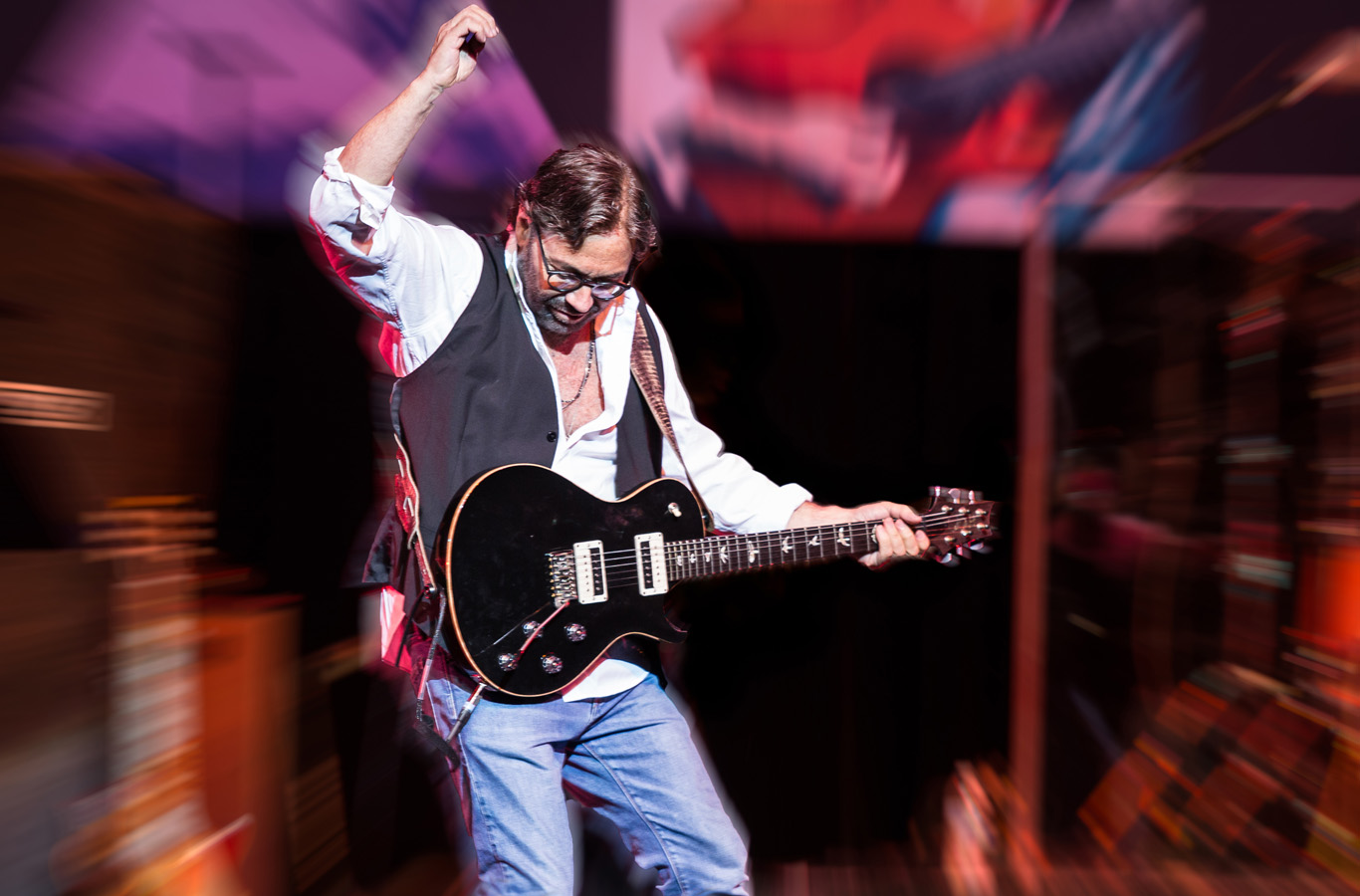
Al: I then saw my life where I might give up electric guitar for a lot of obvious reasons. I just can't see myself at 85 playing super loud music. I can't even see it now, but I'm doing it a little bit reluctantly because it's so loud and it’s just not where I've grown to. After 34 records the compositions have evolved, and my writing has really evolved. So going back to the early music is a lot of fun but I got to say it's certainly not as deep and aesthetic as the newer stuff. I rediscovered the old music because I have not listened to it for so long, but I pulled out some of those charts and they were more interesting than I thought. I’m playing that same Black Les Paul which I haven't played since 1978. I have it out on tour with me so I’m recreating the music in more ways than one. I'm also featuring a couple tunes from the first Return to Forever album. When I joined the band, I went into the first rehearsal and the first pieces that were put in front of me were “Beyond the Seventh Galaxy” and “Song To The Pharaoh Kings”. And I have those charts with me and we're playing them live.
So, it's going all the way back to when I was 19. Yeah, and it deserves to be played again because it's so great. And to only write new music and kind of forget about the past is not happening. Pop acts do that. If they have a hit, they play their hits. These are my hits. I have a veteran keyboard player that I sponsored coming into the country. His name is Philippe Sais. He came from Paris, France back in 1978, and he was in my first band. It's a reunion for sure because I get Gumbi as well, Gumbi Ortiz on percussion. He's played with me many, many times in the past, so many different groups and records.
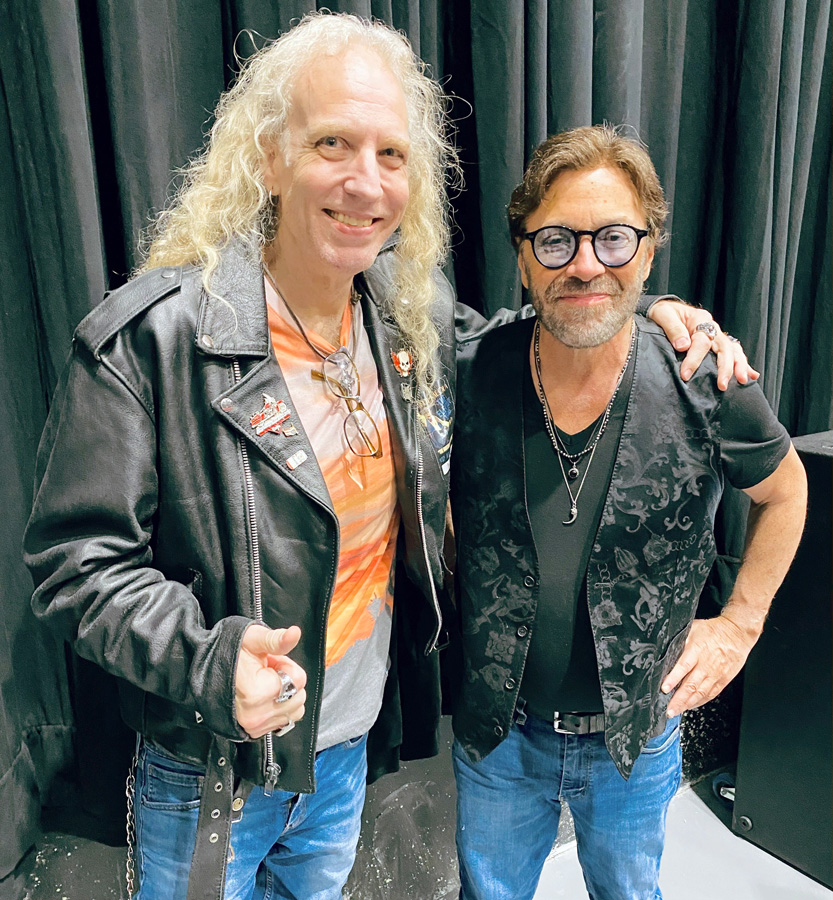 BTQ: And he did not disappoint. He played such classic songs from Elegant Gypsy and Land of the Midnight Sun. I went on to ask him about cellist Tina Guo because I had worked with her in the studio as well. She's a wonderful cello player and they did a Metallica song together.
Al: Tina Guo? Yeah, she's great. We did that in Germany when she was part of my group. Not just Germany, I think it was also Europe. I don't think she knew too much about my music before she took the gig, but I think friends of her would say, “Oh, you got to play with Al Di Meola”. One thing about Tina, she was really a great member of the band. She took great direction. She was very, very, like a classical musician, very, very well disciplined and can read well and play perfectly. And I said, the one thing you must do, Tina, is learn how to improvise. If she improvised, she would still be in my band, I mean, for sure. It's the classical side, yeah. You can get away with that with heavy metal. She loved heavy metal and she loved classical, but she didn't have any jazz shops at all. Being the other instrument in the band other than piano, I really needed her to improvise, but there was no possibility. She had no clue how to do that, but everything else was stellar and her attitude was phenomenal. She was great in her own classical way. I said, who's the band? She said Metallica. I said, well, I never heard of them, we'll do it anyway.
BTQ: I also asked him about his love of The Beatles and his tribute albums to them. He goes on to explain his deep influence from the Fab Four’s music.
Al: The Beatles are in our life every day. You know, we see or hear something about the Beatles on a daily basis, even now. It's embedded and then we get reminded every day. It's just constant reminders of the greatness of that music; it's actually aesthetic pop music. I really wanted to respect the songs as close to the original as possible but not do it the same way the Beatles did it. So, it was a fine line, but it was a smart thing to do because those Melodies are incredible. Also, the chord changes were great. I picked songs that had really nice changes. I sat down with the music and went through the songs that had the most interesting harmonic changes that I could do things with. I couldn't do anything with “Come Together” because there's only one chord. I picked songs that had beautiful changes, like “And I Love Her”, “Michelle”, “Penny Lane”, “Strawberry Fields”, “I Am the Walrus”. There's so much meat in those compositions that it became a project of passion for me. And the first one was done at Abbey Road, so I was like a kid in Disney World. I felt like a five-year-old going to Disney World for the first time. I mean, a feeling we don't get as adults. I felt it by experiencing that and being there every day. It was just something that we don't get anymore, that kind of thrill.
BTQ: I can only imagine what kind of thrill that was for him being a Beatles fan and recording at Abbey Road Studios, the very studio that they had done all their wonderful classic albums. Now Al goes on to tell me about his latest album Twentyfour and how he survived a heart attack on stage.
Al: I've been working for three years on what might have been my final opus. I say that because I almost died in September 2023 from a heart attack. It was in Romania right in the middle of a song. I was rushed to the hospital and had surgery. I had the best guy working on me, so it was cool. They put stents in and now I’m back to normal, better than before. No, I didn't pass out. I remember it. I was awake for the whole time, but it felt like a 5,000-pound weight on the middle of my chest. The pain was unreal.
This record is going to surprise people. It's a double record, double studio album, and there’s a ton of great stuff on it. Really proud of this record. It started out as a solo acoustic record and then because of COVID and having so much time home, I just got carried away. I would say a record and a half's worth of songs with full production, so you know I'm playing all the percussion, bass, keyboards. I'm playing electric guitar on at least a third of the record so it's primarily first and foremost, acoustic. I had a guest tabla player who was amazing, probably the top tabla player in the world today. His name was Amit Kavthekar from India. I had Gumbi Ortiz on a piece. Mostly it's myself doing everything. Oh, and I had a singer from Spain on a piece that it's going to surprise people. I also have the chamber Orchestra on three pieces as well.
Conclusion:
It was a wonderful honor to interview Al Di Meola and meeting him after his performance at The Plaza in Orlando. His latest album Twentyfour, was released just three days before his 70th birthday. And everybody, please be sure to go support Al. He conceived of and recorded what he thought was going to be a reflective acoustic album but changed shape and sonics to become something completely different. Al like such greats of the past as Jeff Beck continues to reshape his sound and compositions as he gets more mature with age. A gift we should all be thankful for receiving.

Multi-Emmy award winning Brian Tarquin is an established top rate composer/guitarist/producer. Through the past 30 years he has enjoyed Top 10 radio hits in several formats as Smooth Jazz, NACC Loud Rock, Roots Music Reports, Metal Contraband, Jam Band & CMJ’s RPM charts. His music has been heard by tens of millions on a plethora of television and film scores such as: CSI, Ellen, Extra, TMZ, 60 Minutes, Sex and the City, 20/20, SNL, Godzilla, Seinfeld, Cheers, Charmed, Good Morning America. He has recorded and produced such legends as Joe Satriani, Larry Coryell, Jean-Luc Ponty, Eric Johnson, Robben Ford, Steve Morse (Deep Purple) to name a few. In 2023 Brian’s music video “Speed of Sound” featuring Joe Satriani won Best Video of the Year by the Josie Music Awards.
linktr.ee/guitartrax
Share this post
Related
Posts
Featured Articles, Online Exclusives, Promotions, SFL Music Articles
GOV’T MULE – Warren Haynes
Interview