




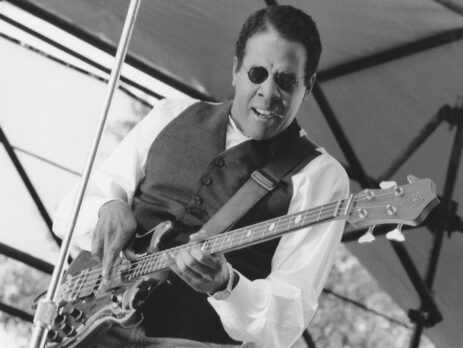
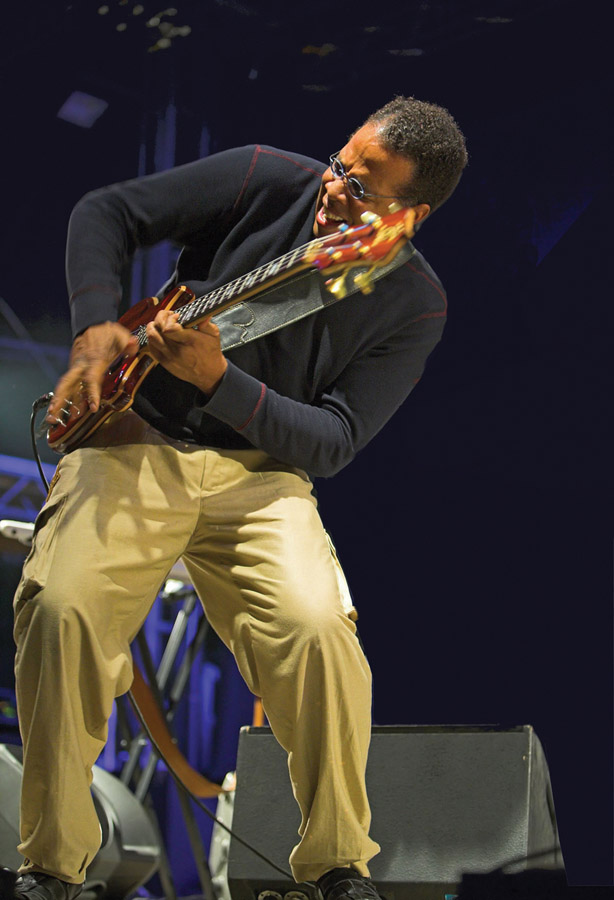
 Stanley Clarke
Fusion Maestro Connoisseur
By Brian Tarquin
Stanley Clarke was referred to as a legend by age 25. He is also a noted music composer, orchestrator, conductor, and performer for such films as Boyz n the Hood, What’s Love Got to Do with It, Passenger 57, and Poetic Justice, to name a few. He has been quoted saying, “Film
has given me the opportunity to compose large orchestral scores and to compose music not
normally associated with myself.” Sony has even released a CD titled Stanley Clarke at the
Movies, which showcases his true diversity as a musician.
Originally Clarke’s goal was to become the first black musician in the Philadelphia Orchestra until he met jazz pianist Chick Corea. At the time Corea was working with Stan Getz putting together a new band for Getz. Chick was also composing music for the band; in which one of the albums was entitled “Return to Forever” in 1972. Stanley’s bass playing and improvising was prominent on the release. In the beginning the band was separate from Getz and mostly a studio side project. However, as time went on and popularity grew Return to Forever was born!
This was Mach 1 of Return to Forever that primarily performed Latin-jazz style music and used only acoustic instruments. This band consisted of singer Flora Purim, Airto Moreira on drums and percussion, Joe Farrell on saxophone and flute, and of course Stanley on bass. But it wasn’t until the groundbreaking 1973 release of Hymn of the Seventh Galaxy featuring Bill Connors on guitar, Lenny White on drums, Mingo Lewis on percussion and Stanley’s bass chops that put Return to Forever on the fusion map.
I had the pleasure of speaking with Stanley and asking him about the Larry Graham song “Hair,” which he covered featuring Joe Satriani on Guitar Masters Series 1.
BTQ: He shares the story of how he stumbled upon the song “Hair”.
SC: I think it was before they even recorded it. I was standing in a club in San Francisco with Carlos Santana. Carlos had on this trench coat with all these tape recorders underneath his coat—he’s a real fan of music and loved to make recordings of live shows. He said, ‘Man, you have to check out Graham Central Station.’ It was in this little club. I knew Larry with Sly and thought he was an amazing bass player. When I heard ‘Hair,’ I said ‘Oh, shoot!’” So as an homage to Larry, I recorded the song featuring Joe Satriani.
https://open.spotify.com/track/6q454eThBNn17jcUzkdfyU?si=37aea72aa4f740ee
BTQ: Stanley has a home studio where he does most of his solo projects for albums and film or television scoring.
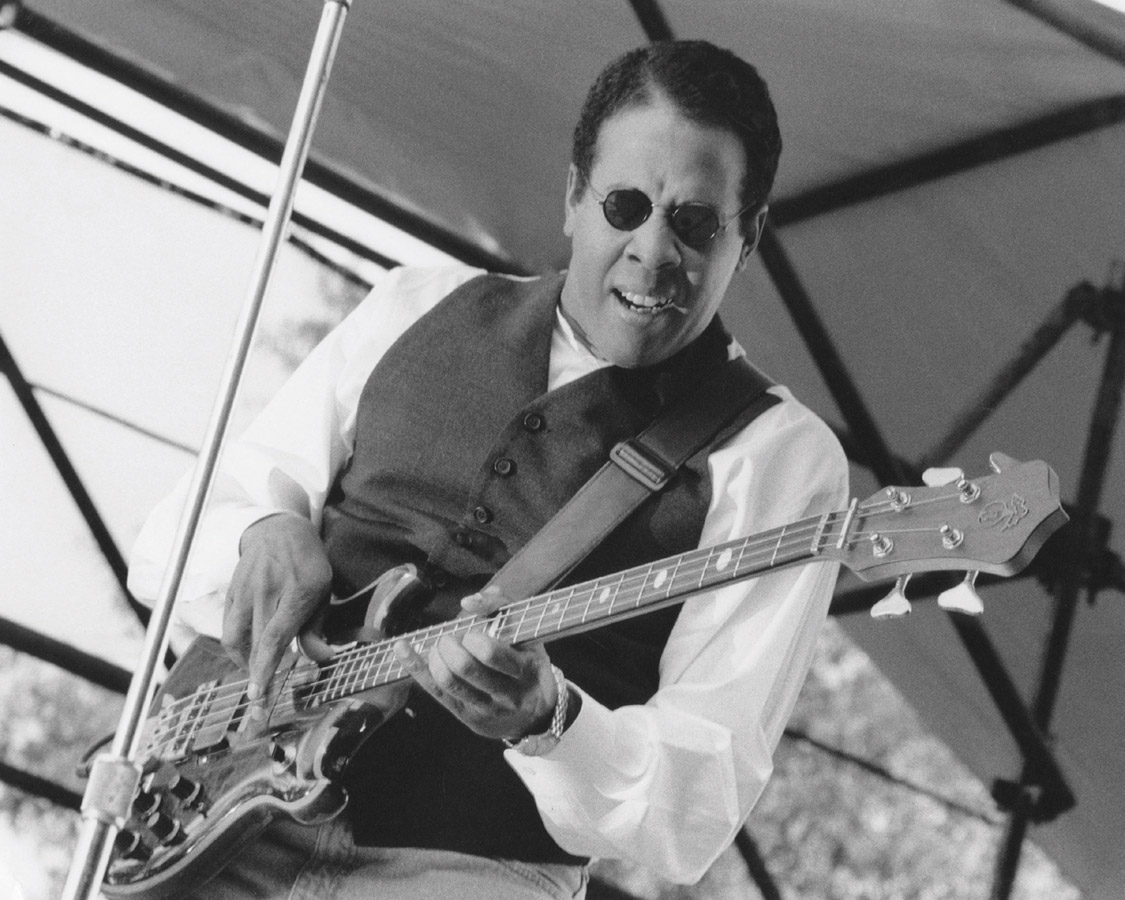
SC: I use my Alembic basses and F2 preamps recording through two SWR amps and cabinets. One cabinet has 2 × 15-inch speakers, and the other cabinet houses 4 × 10-inch speakers. I then miked each cabinet separately and took a direct signal out of the amps themselves. This gives me the flexibility to blend during mixdown.
 BTQ: What recording DAW do you use?
SC: I record using a Fairlight hard disk recorder, which for the time was similar to Pro
Tools.
BTQ: When mixing on digital hardware, such as Pro Tools, many old-school engineers like the feel of actual faders underneath their fingers to control the mix and utilize the onboard EQs. I have a vintage analog Trident 28 × 24 console, and the EQs are so musical that I want to be able to physically turn the frequency knobs to affect the tracks myself. It also allows me to bus certain tracks and use vintage outboard effects processors, such as the Eventide H3000. Do you feel the need for this type of approach?
SC: Yes, in fact I use an analog mixer to monitor and EQ the signal. During mixdown, my engineers still liked having something physical to work with and used the analog board.
I also use a Fairchild limiter, which I used on my first four solo albums. But with the new technology of today, there is a current Fairchild plug-in I use that gets 95 percent of the sound of the original hardware. Because of the Alembic’s wide dynamic range, you need a really nice limiter to control the sound when recording.
BTQ: Stanley’s choice of mics varies; when choosing a mic, he considers not only the source, but the room ambience as well.
SC: For a really big bass sound, I use an outside studio. In the past I’ve used studios that housed separate rooms for each instrument, and I really like the feel and sound of each instrument being physically separated. On my release The Toys of Men, the airplay thing is really tough—there is really nothing out there. I do have some faith in satellite radio. They have so many more possibilities and programs. As for the average guy, satellite radio just needs to figure out how to reach them and build up their listenership.
Conclusion:
In the 1970s Stanley redefined and reshaped the way bass players approached their instruments. He took Larry Graham’s (Sly and the Family Stone) slap-funk technique and pushed it to the next level. He is also the inventor of the piccolo bass and tenor bass.
Clarke’s musical collaborations have been shared with such giants as Jeff Beck, Stewart Copeland, Larry Carlton, Billy Cobham, Najee, Jean-Luc Ponty, Al Di Meola, Lenny White, Marcus Miller, Victor Wooten, the late Chick Corea and legendary drummer Jack DeJohnette. He was Rolling Stone magazine’s first Jazzman of the Year and bassist winner of Playboy’s Music Award for ten years in a row. Stanley received Bass Player Magazine’s Lifetime Achievement Award and is a member of Guitar Player Magazine’s “Gallery of Greats.” Stanley’s bass legacy will live on through generations for his contribution to the instrument.

Multi-Emmy award winning Brian Tarquin is an established top rate composer/guitarist/producer. Through the past 30 years he has enjoyed Top 10 radio hits in several formats as Smooth Jazz, NACC Loud Rock, Roots Music Reports, Metal Contraband, Jam Band & CMJ’s RPM charts. His music has been heard by tens of millions on a plethora of television and film scores such as: CSI, Ellen, Extra, TMZ, 60 Minutes, Sex and the City, 20/20, SNL, Godzilla, Seinfeld, Cheers, Charmed, Good Morning America. He has recorded and produced such legends as Joe Satriani, Larry Coryell, Jean-Luc Ponty, Eric Johnson, Robben Ford, Steve Morse (Deep Purple) to name a few. In 2023 Brian’s music video “Speed of Sound” featuring Joe Satriani won Best Video of the Year by the Josie Music Awards.
linktr.ee/guitartrax
Share this post
Related
Posts

Featured Articles, Online Exclusives, Promotions, SFL Music Articles
GOV’T MULE – Warren Haynes
Interview