





 Tommy Emmanuel – Finger Lickin’ Good
By Brian Tarquin
Introduction
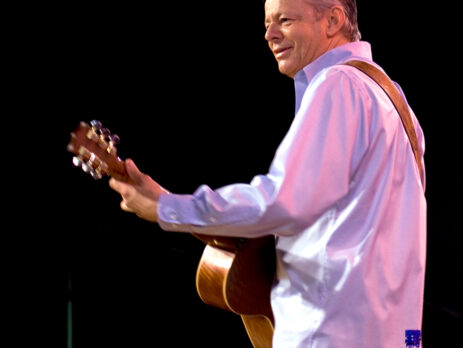
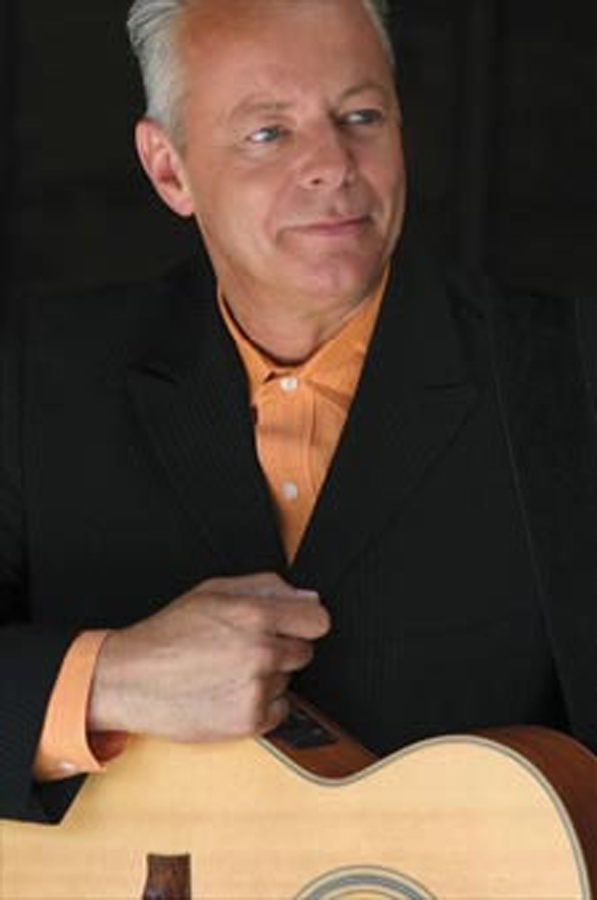
Native Australian guitarist Tommy Emmanuel’s technique has been described as fingerstyle. A unique way of playing the guitar similar to the way a pianist plays the piano by using all ten fingers. In fact, guitar legend Chet Atkins honored Tommy Emmanuel with the title of “Certified Guitar Player” for his lifetime contribution to the instrument, a rare honor shared by only three other people in the world – Jerry Reed, Steve Wariner and John Knowles.
His career has spanned over four decades and includes a plethora of music and instructional recordings. Among his achievements was receiving a 2007 Grammy nomination for the song “Gameshow Rag” from his CD, The Mystery, which was released on the Favored Nations label. Tommy was also voted one of the Top Three Favorite Artists in an Acoustic Guitar magazine readers’ poll. Tommy was honored by Australia’s Rolling Stone magazine as most popular guitarist for two consecutive years. He also has four Platinum and Gold albums and garnered the “Golden Guitar” award in both 2006 and 2007 at the CMAA Awards in Australia.
In his teenage years, he turned heads as a highly sought after session player and sideman, and by his early twenties, Emmanuel was playing on chart-topping hits and performing with some of the biggest names in Australian music, including Air Supply and Men at Work. Inspired in part by his hero, Chet Atkins (who would later become a friend, mentor, and collaborator), Emmanuel stepped out on his own as a solo artist in 1979, releasing the first in a string of critically and commercially acclaimed instrumental albums that would make him an unlikely celebrity in his home country and beyond. In the decades that followed, he would go on to headline everywhere from the Sydney Opera House to Carnegie Hall; tour with the likes of Eric Clapton and John Denver; win a Grammy Award for Best Instrumental Arrangement; perform for a televised audience of more than two billion at the closing ceremony of the Sydney Olympics; and collaborate with everyone from Les Paul and Mark Knopfler to Joe Walsh and Richard Thompson. NPR’s World Café declared him “one of the best acoustic guitarists in the world,” while the New York Times hailed him as a “prodigy”.
Ironically, back in the mid-nineties, Tommy and I shared top charting spots on NAC/Smooth Jazz Radio. I was signed with Instinct Records and just released my acid jazz album Last Kiss Goodbye, which received quite a bit of airplay at NAC Radio. Around that same time, Tommy’s CD, Midnight Drive, was cruising the same stations on the dial. Oddly, we had never spoken until this interview.
BTQ: What guitars and mics did you use on the song Cantina?
Tommy: In “Cantina,” I played three parts, sometimes in unison and sometimes in harmony. I used my maple guitars and mic’ed them with two Neumann 149s. I got a drum machine to play the bass drum and conga parts, then overdubbed brushes and real drums around it. Two of the guitar parts were played on steel strings, with one panned to the left and one panned to the center. The third part was played on a very ordinary Takamine nylon string that I borrowed. I wanted to get the sound of a real guitar trio with a party atmosphere.
BTQ: Where did you record the song?
Tommy: At a friend’s place in Nashville called Azalea Studio; we mixed it at Wistaria Studio in Virginia. Kim Person engineered the album – she is a great engineer, specializing in acoustic guitar. She can get such a great natural sound from the guitar.
 BTQ: What acoustic mic’ing techniques did you use?
Tommy: I used a Neumann KM184 pointing down the neck of the guitar towards the soundhole. Right in front of me, I used a handmade mic that a friend of Kim had designed, similar to an old Telefunken 251 and centered to the soundhole about 8” in front of me. I also took a direct out from my guitar pickup into my AER acoustic amp that was mic’ed in a separate room. When we did the mix, we left both acoustic guitar mics dry and put just a little reverb on the amp mic to create that big, beautiful depth – that really crystal-clear sound, like you’re right in front of my guitar.
BTQ: What preamps were used?
Tommy: Kim used Pendulum preamps, which were made for her studio (Pendulum Audio specializes in high-quality, handbuilt vacuum tube recording equipment designed for amplifying stringed instruments – check them out at pendulumaudio.com).
BTQ: Digital or analog?
Tommy: We recorded the whole album in three days using ProTools. For preproduction, Kim goes into the studio the day before and sets up the mics and tweaks the sounds, so everything is ready for me to record. The next day, I find the right spot on the mic and just go from there. I like using my custom guitars that were made for me in Australia.
Conclusion
Tommy’s quote sums it all up, “I feel like the Indiana Jones of the guitar world…I’m on this wild journey, just making it up as I go, and I’m thrilled that so many people are having fun joining along with me.”
As an engineer friend of mine once told me after he had witnessed Tommy playing alongside Les Paul at New York’s Iridium, “You’ve got to check this cat out!” I now advise you to do the same at tommyemmanuel.com.

Multi-Emmy award winning Brian Tarquin is an established top rate composer/guitarist/producer. Through the past 30 years he has enjoyed Top 10 radio hits in several formats as Smooth Jazz, NACC Loud Rock, Roots Music Reports, Metal Contraband, Jam Band & CMJ’s RPM charts. His music has been heard by tens of millions on a plethora of television and film scores such as: CSI, Ellen, Extra, TMZ, 60 Minutes, Sex and the City, 20/20, SNL, Godzilla, Seinfeld, Cheers, Charmed, Good Morning America. He has recorded and produced such legends as Joe Satriani, Larry Coryell, Jean-Luc Ponty, Eric Johnson, Robben Ford, Steve Morse (Deep Purple) to name a few. In 2023 Brian’s music video “Speed of Sound” featuring Joe Satriani won Best Video of the Year by the Josie Music Awards.
linktr.ee/guitartrax
Share this post
Related
Posts



Featured Articles, Reviews, SFL Music Articles

SQUEEZE, ADAM ANT & Haircut 100 – Clearwater
Concert Review